Greek Golden Visa 2025: Residency by Investment in Greece

If you’re exploring residency by investment programs in Europe, the Greek Golden Visa 2025 remains one of the most attractive options. Since its launch in 2013, it has become a top choice for investors seeking EU residency, visa-free travel in the Schengen Zone, and a possible path to Greek citizenship by investment.

This guide explains everything you need to know about the Greece Golden Visa—from requirements and investment options to benefits, drawbacks, and the application process.


Why Choose the Greek Golden Visa?

  • No minimum stay requirement – you don’t need to live in Greece to keep your residency.
  • Flexible investment routes – including real estate, funds, or long-term leases.
  • Schengen Zone access – travel freely in Europe for up to 90 days in any 180.
  • Pathway to citizenship – become eligible for Greek citizenship after 7 years of tax residency.
  • Family-friendly program – includes spouse, children under 21, parents, and even grandparents.
  • Affordable lifestyle – Greece offers relatively low living costs, attractive property prices, and high quality of life.
  • Safe EU country – modern healthcare, strong education system, and Mediterranean lifestyle.
  • Low renewal costs – permits are valid for 5 years and relatively inexpensive to renew.

Things to Consider Before Applying

  • Residency does not grant the right to work in Greece or the EU.
  • Citizenship requires 7 years of tax residency and proof of integration (language exam, citizenship test).
  • Real estate used for the visa cannot be rented short-term (Airbnb, etc.)—only long-term leases are allowed.
  • Processing times now exceed 18 months due to high demand.
  • You must maintain your investment to keep your residency until citizenship.
History of the Greek Golden Visa

Launched in 2013, the program quickly became one of Europe’s most successful. By 2023:

  • Over 31,000 main applicants received Greek residency.
  • Investments generated €7.1 billion for Greece’s economy.
  • Most applicants came from China, Turkey, Russia, and the Middle East.

Applications peaked in 2023 with 8,506 submissions, highlighting its strong global appeal compared to other EU residency programs.


Who Is Eligible for the Greece Golden Visa?

Any non-EU/EEA citizen who:

  • Is at least 18 years old
  • Has a clean criminal record
  • Holds valid health insurance
  • Makes an eligible investment in Greece

Greek Golden Visa Investment Options (2025)

As of August 31, 2024, the updated investment thresholds are:

  • €800,000 real estate – single property (120m²+) in Athens, Thessaloniki, or major islands (e.g., Mykonos, Santorini).
  • €400,000 real estate – single property (120m²+) in other parts of Greece.
  • €250,000–€400,000 special projects – restoration of historic buildings or commercial-to-residential conversions.
  • €500,000 capital investment – government bonds, REITs, or Greek private equity funds.
  • €400,000 long-term lease – hotel or furnished tourist residence (minimum 10 years).

👉 Transitional rules: If you placed a 10% deposit by September 30, 2024, and finalize by December 31, 2024, you may still qualify under the older thresholds (€250,000 / €500,000).


How to Apply for the Greek Golden Visa

  1. Choose your investment (real estate, lease, or capital contribution).
  2. Get a Greek tax number (AFM) and open a local bank account.
  3. Complete the investment (purchase property or transfer funds).
  4. Submit application & documents (passport, insurance, proof of funds, criminal record, etc.).
  5. Receive temporary permit (“blue papers”) valid for 1 year.
  6. Provide biometrics in Greece within 6 months.
  7. Get residency permit – valid for 5 years and renewable.

Renewal & Citizenship

  • Renewal: Every 5 years, as long as the investment remains valid.
  • Citizenship: After 7 years of tax residency (183 days per year in Greece), plus language proficiency and passing a citizenship exam.

Is the Greece Golden Visa Right for You?

The Greek Golden Visa 2025 is ideal if you want:
✔ Residency without relocation requirements
✔ Schengen access and EU mobility
✔ A family-inclusive investment program
✔ Affordable entry compared to other EU Golden Visas

If your ultimate goal is EU residency with flexibility, Greece remains one of the best Golden Visa programs in Europe.
Christmas in Greece

Christmas in Greece

In Greece when we talk about the “holidays” we are referring to the holiday period of ChristmasNew Year and Epiphany.

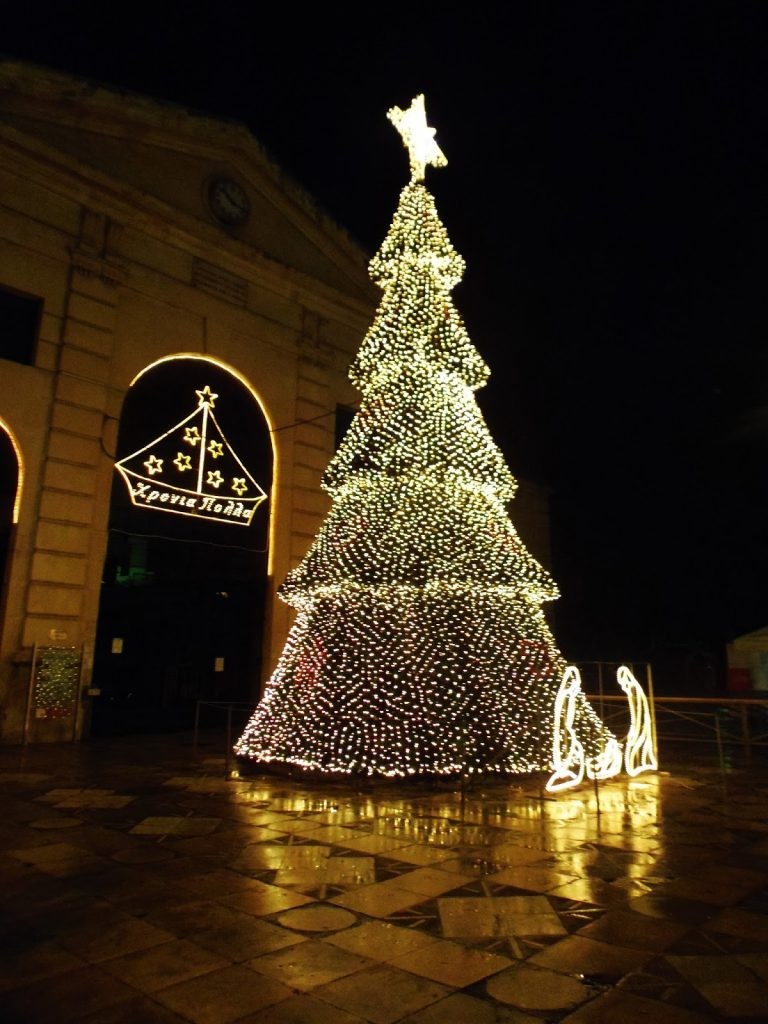
On December 6th, we celebrate St. Nicholas Day, the patron saint of sailors and seamen who are a large part of Crete’s livelihood. And this is also the main reason why in Crete we used to decorate a wooden ship replica rather than a Christmas tree. Of course, the Christmas tree has gradually become more and more popular, but for those who say that this is a western custom rather than a Greek one, there is evidence to show that on the first day of the new year the children of ancient Greeks used to rejoice holding decorated branches while singing the ancient ritual carol of Eiresioneoutdoors – get a chance to have a tent outdoor celebration! If it’s your birthday, you’ll get the the package partially discounted!

Traditionally the Christmas holiday period lasts 12 days in Greece. There are many customs associated with the “twelve day of Christmas,” some very old and others relatively recent, like the decorated tree and the turkey on the Christmas-day table.

Historically, in 354 A.D. it was arranged for the birth of Christ to be celebrated on December 25, the same day that they celebrated the birth of the ancient god Mithra, known as the “invincible sun god” and god of all solar deities in idolatry. With the change, and the turning of people towards other gods, the popularity of the “invincible sun god” dropped and Christ took his place.

Christmas in Greece, or “the holidays,” are not what they were 40 years ago. Over the years we notice a universal culture developing as the western European customs spread more and more change. In some cases, it caused the elimination of local customs in certain areas – even entire countries.

Today Christmas in Greece appears more impressive, glossier and more glamorous. Store windows are decorated almost a month in advance, and in the cities the streets and town squares are lit with colorful lights. Also, many people now travel either abroad or around Greece to places which offer winter holidays.

FASTING AT CHRISTMAS

In Greece, a fasting period would start almost 40 days before Christmas. While the fasting was predominately for religious reasons, many considered the period to be a healthful practice as well. The faithful would not eat any animal or its related products, i.e. meat, dairy or eggs.

CHRISTMAS PREPARATIONS

As Christmas drew near, preparations began so all would be ready for the big holiday. Houses would be cleaned with extra care, and a few days before Christmas housewives would prepare the Christmas cookies, which would be eaten on Christmas Day when the fasting ended.

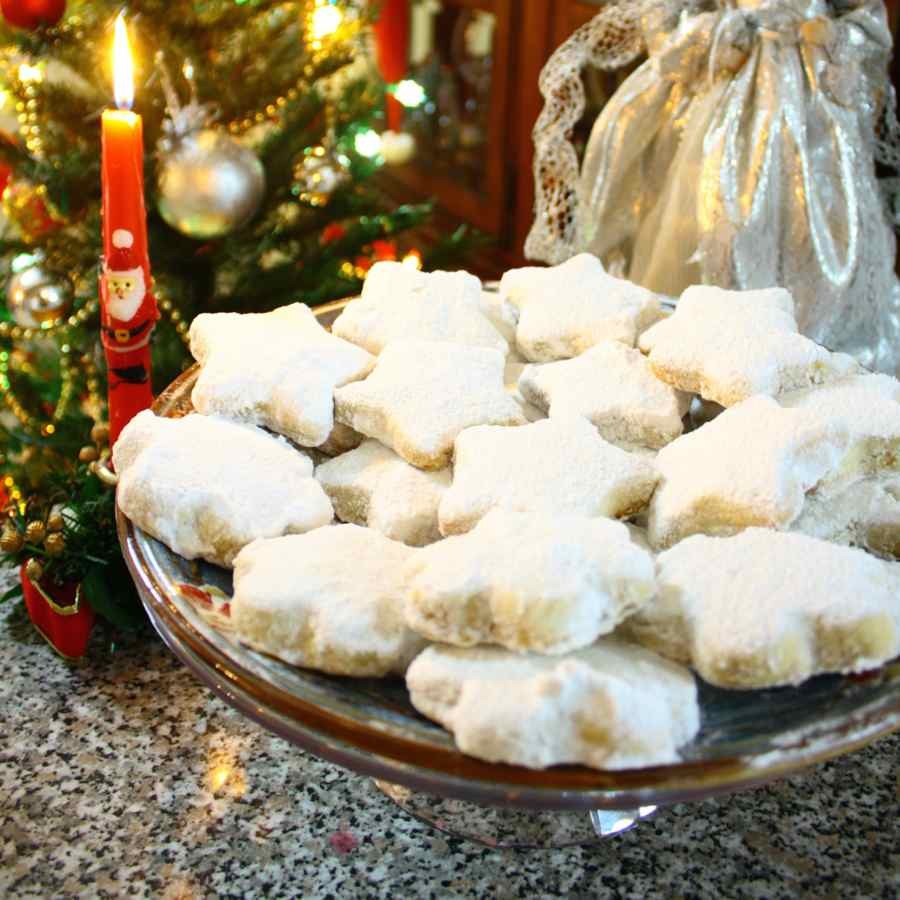
In the past the honey cookies (melomakarona) were made exclusively for Christmas, while sugar cookies, or kourabiedes (kourabiethes, th as in this), were prepared for the New Year. Today, though, that distinction is not observed and both melomakarona and kourabiedes are prepared and consumed during the Christmas and New Year holidays period.

Pitfalls of buying property in Greece

“Pitfalls of Buying Property in Greece: What Every Buyer Should Know”?

From sun-drenched islands to charming stone villages, Greece offers incredible opportunities for property buyers—whether you’re searching for a holiday retreat, a retirement haven, or an investment that qualifies for the Golden Visa. But before you sign on the dotted line, it’s crucial to understand the common pitfalls and risks that can turn a dream into a legal or financial headache.

In this guide, we’ll walk you through the most common mistakes foreign buyers make, including legal oversights, hidden costs, zoning issues, and bureaucratic delays. Whether you’re buying a home in Santorini or land in the Peloponnese, knowing what to avoid can save you time, money, and stress.

Continue reading “Pitfalls of buying property in Greece”

Chania city

Venetian era

The Turkish quarter 

The rich history of the area dates back from the Venetian era. It was named Ponte Dei Viari. This name refers to a bridge connecting the eastern gate of the Kasteli settlement with modern Daskalogianni St. and Splantzia Square. The bridge took the name of an affluent Venetian family who were benefactors of the city in difficult times. The area had a lot of underground waters. That is why there are findings of underground Venetian water tanks. These tanks could supply the city for 6 whole months. Current St. Nickolas church was originally the temple of the adjacent Monastery. The Order of the Dominican monks occupied the monastery. It was built in 1320. After the invasion of the Turks in 1645, the church was converted into a Mosque. It was named Houghiar Tzamissi – Hünkâr Camisi. A minaret was added on the south side of the temple.

Modern Chania 

In the late 19th century, near the end of the Ottoman era, the city’s population was rising. It began to feel confined within the limits of the Venetian Walls. Therefore the city began stretching out to the West, the East and mostly to the South. In 1870, the Turkish Chief Commander of Crete, Reouf Pasha, envisioned a city master plan. This plan included a Grand Walk for leisure and outdoor activities beyond the Venetian Walls. His daily routine involved walking towards a sandy area with a shady fig tree. This habit inspired him to construct a City Garden (bahce). It was meant for everybody to enjoy some public, open, green space. Cultural events could take place there according to the European standards of the time. 

Continue reading “Chania city”

How to Be a Great Guest — Longer Stays

Much has been said about how to be a good host, but far less about how to be a good guest — particularly when your visit stretches beyond just a couple of days. Whether you’re staying with close family or distant acquaintances, being a guest comes with real responsibilities. Hosting can be a joy, but it can also be exhausting, even for the most enthusiastic of hosts.

Having lived abroad for many years, we’ve had plenty of experience welcoming guests — and hearing stories from others who do the same. Based on these experiences, here’s a practical guide to being the kind of guest everyone loves to have.

Continue reading “How to Be a Great Guest — Longer Stays”

Chania with kids

Archaeology for Kids in Crete

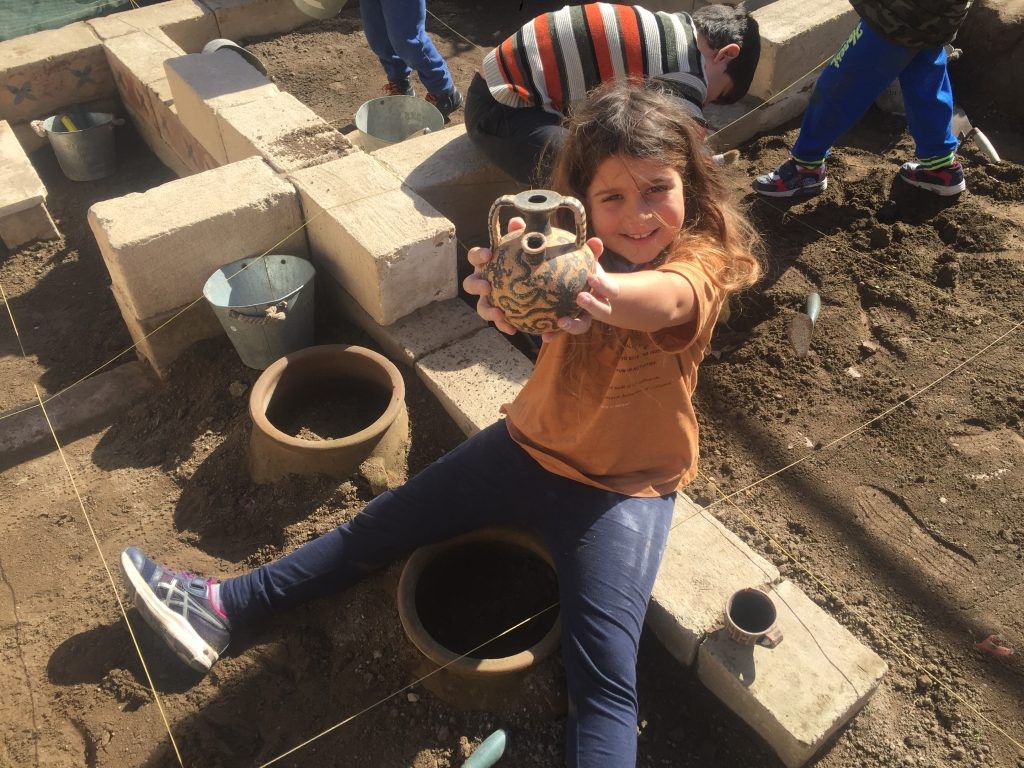
We went to Kissamos,  a small town just a half-hour easy drive from Chania in Crete. Our first is the archaeological museum featuring findings from the western part of Crete, mostly Polyrenia, Falasarna, and other smaller ancient towns of the area.

The museum was founded in 2005, and it is housed in a two-floor Venetian monument that once was hosting the Headquarters of the Governor of the area. On the ground floor, you will basically admire the findings from Ancient Falasarna and Polyrenia which flourished during the Hellenistic period as well findings from the prior Minoan era.

On the first floor, you will admire the mosaics that are in maintained very good condition from the Hellenistic period of the area, along with other findings, such as coins, amphoras, jewelry, and tomb findings.

Archaeolab

Continue reading “Chania with kids”

Buy property in Greece

How to buy a property in Greece?

Today I want to share with you why Crete is not just a great place to visit, but also a great place to live or invest. First of all, Creed has a lifestyle that is hard to beat. Imagine waking up in 300 days of sunshine a year, enjoying the crystal clear sea and surrounding by beautiful nature. The culture here is also incredible. It’s welcoming. And full of history.

Continue reading “Buy property in Greece”

Beaches near by

Stalos beach

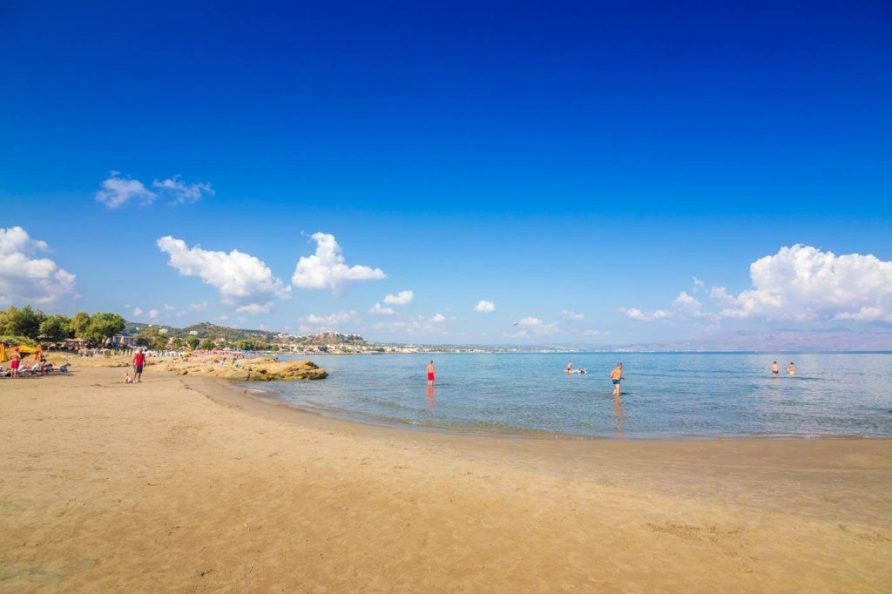
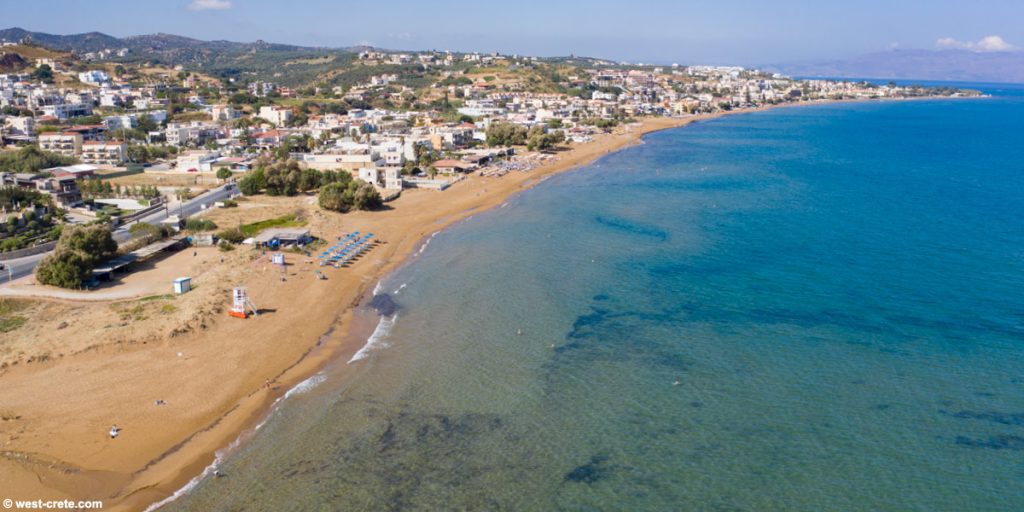
Located to the West of Chania, Stalos is part of a long stretch of sandy beaches that runs from Stalos to Gerani. Stalos, Agia Marina and Platanias run into each other forming one long coastal strip and beach. It is the most developed tourist area in the Chania region.

Type of beach: a long, wide sandy beach

Size of beach: Stalos beach is about 2 km long but the beach carries on into Agia Marina and beyond.

How busy: Stalos beach is not as busy as Agia Marina or Platanias as the hotels are not as densely packed along the length of the beach. It’s also very wide so doesn’t ever feel cramped.

Winds: open to the North so it will be affected by north winds (prevalent in summer) and can have waves on those days.

Facilities

Sunbeds and umbrellas, a few cabins to change, showers, life guards

Safe for children: on quiet days the water is safe and doesn’t drop to quickly. If it’s windy you will get waves and sometimes currents so children need to be supervised (and adults should be careful too).

Car parking: free parking in a number of areas.

Getting there

Chania is only 7 km away along the coastal road. There are plenty of regular buses from Chania.

Eating & drinking

Several cafés and snack bars along the beach

Continue reading “Beaches near by”